

Walk into any semiconductor fab under construction and one welding method comes up above all others: orbital welding. It is the near-universal standard for joining stainless steel tubing in Ultra-High Purity environments. Here is why.
What Is Orbital Welding?
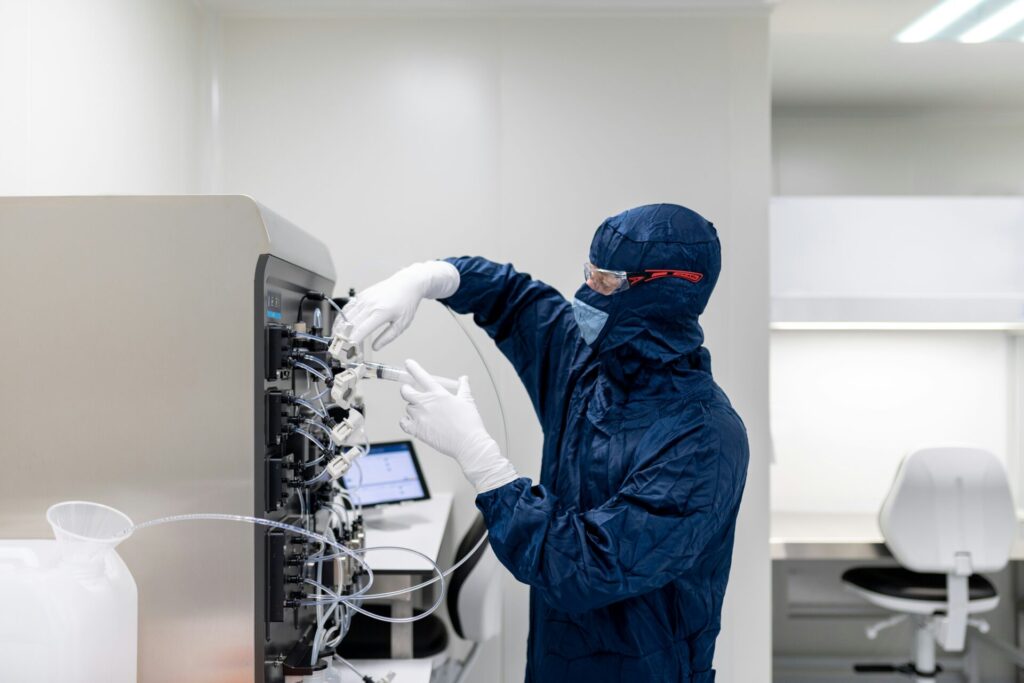
Orbital welding is a fully automated arc welding process in which the torch rotates 360 degrees around a fixed pipe joint. It uses Gas Tungsten Arc Welding (TIG), with a computer-controlled power supply governing arc current, travel speed, arc gap, and shielding gas flow throughout the weld cycle. Once the operator enters the programme, the machine runs the weld with no manual intervention.
The defining characteristic is consistency. Every weld made with the same programme, on the same tube size and material, will be essentially identical.
Why Manual Welding Is Not Acceptable in UHP Piping
This is not a question of skill. It is about the nature of the process.
Manual welding introduces variation: fluctuating travel speed, varying arc length, inconsistent heat input. In UHP piping, that variation shows up in the internal weld bead profile — and an irregular bead creates crevices where particles accumulate. Manual welding also cannot produce the automated weld data records (WDRs) that semiconductor fab construction requires, and managing consistent inert purge gas protection on every joint is far more reliably achieved with an automated system.
How an Orbital Weld Is Made
Tube ends are cut squarely and inspected. The weld head clamps the joint in precise alignment. Inert purge gas — typically high-purity argon — is introduced inside the tube on both sides of the joint, and oxygen content must fall below 50 ppm before the arc is struck. The controller then runs the weld programme across multiple levels, varying current and travel speed to manage heat input around the full 360-degree orbit. On completion, the external weld is inspected, and for critical joints, a boroscope records the internal bead.
Weld Documentation and Traceability
Every weld in a UHP system must be fully traceable. The orbital welding controller automatically generates a WDR for every joint — capturing current, travel speed, shielding gas flow, operator, timestamps, and pass/fail status. These are cross-referenced to weld maps that number every joint in the system. Material traceability covers heat and lot certificates for all tube, fittings, and consumables from mill to installed system.
This documentation is not bureaucracy. It is what allows a fab to investigate a process excursion and trace it to its source.
Cleanroom Welding vs. Off-Site Fabrication
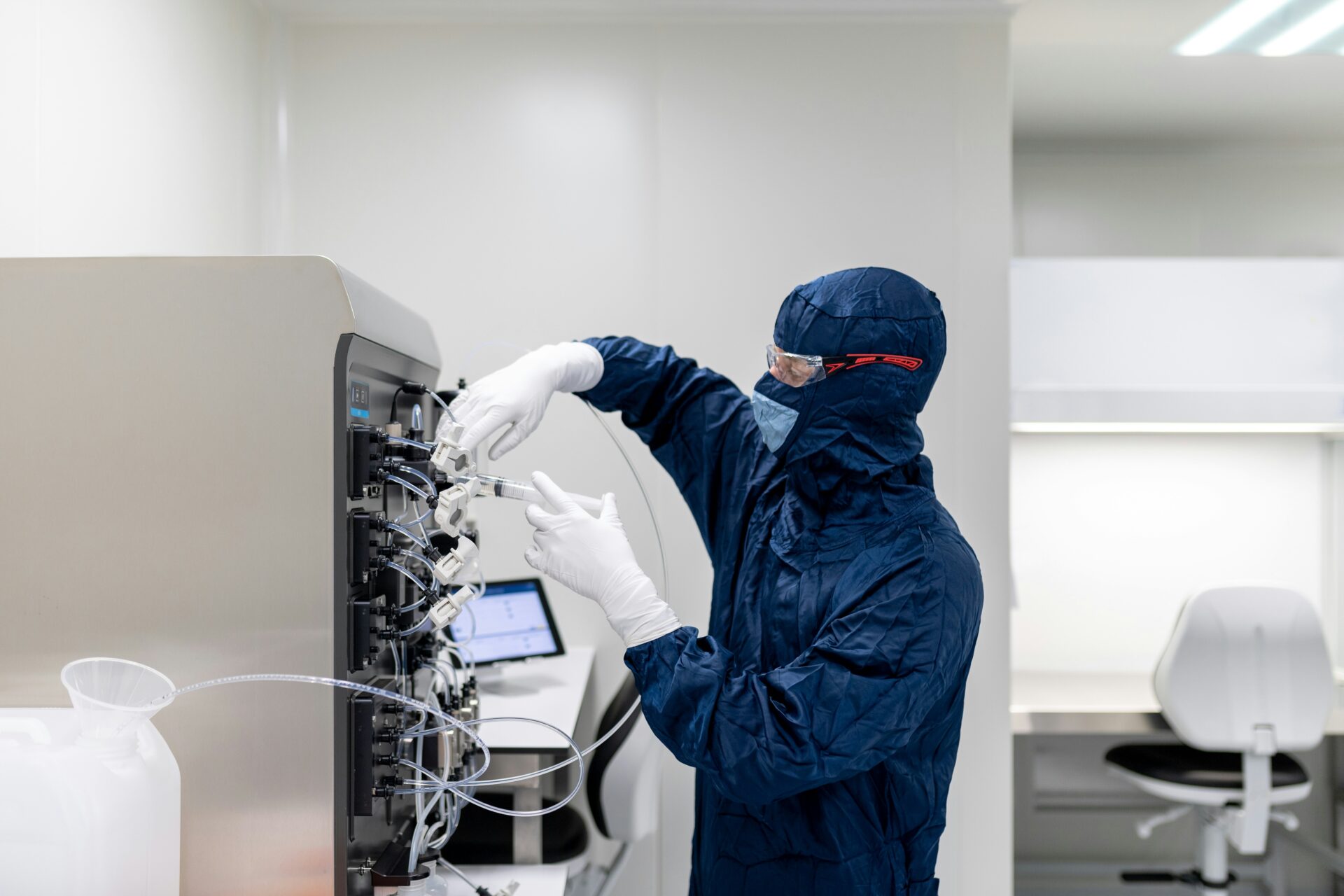
Welding inside a live cleanroom is slow and disruptive. Equipment must enter the controlled environment, welding generates heat and particulate, and access to small-diameter tube in confined spaces is difficult.
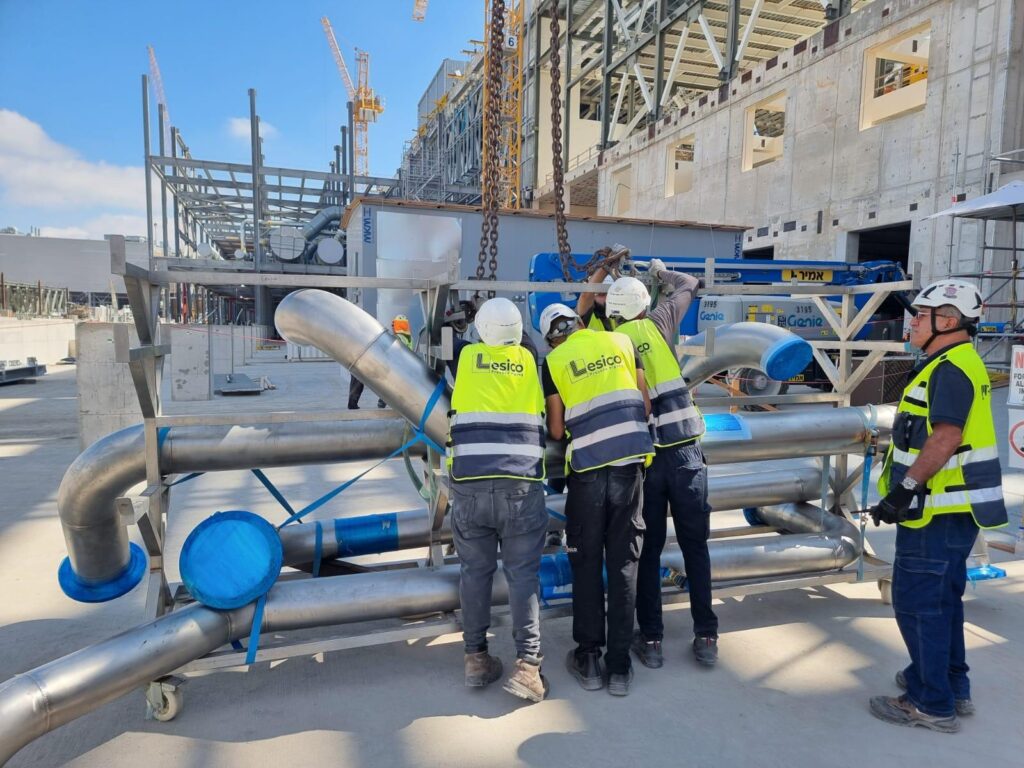
Off-site prefabrication — our core model at Lesico — solves this. Assemblies are welded in a controlled workshop environment, inspected, cleaned, passivated, and packaged before arriving on site. Only final tie-in connections are made in the cleanroom. Fabrication runs in parallel with civil and structural work, compressing the overall schedule. Quality is more consistent, and the cleanroom is protected throughout.
What Lesico Brings to Orbital Welding Projects
At Lesico, orbital welding is core to everything we do. Our team works to SEMI standards and the specific requirements of leading semiconductor fab operators, with full weld documentation, boroscope inspection, and material traceability on every project.
Your UHP piping arrives pre-fabricated, documented, and ready for connection — so your commissioning team can trust the system from the first purge.
Planning a semiconductor fab fit-out or expansion? Talk to our expert team.