

If you work in semiconductor fabrication, you have almost certainly seen “EP” or “electropolished” listed as a requirement on piping specifications. But what does it actually involve, and why is it considered non-negotiable in Ultra-High Purity environments?
What Is Electropolishing?
Electropolishing is an electrochemical process that removes a thin, controlled layer of metal from a stainless steel surface using an electrical current in an acidic electrolyte bath. It is the reverse of electroplating: instead of depositing metal, it removes it.
The component is submerged in a phosphoric and sulphuric acid solution and connected as the anode in an electrical circuit. When current flows, metal ions dissolve from the surface — faster at microscopic peaks than at valleys, because current density is greater at protruding points. The result is a surface that is measurably smoother, cleaner, and more chemically passive than anything mechanical polishing can achieve.
How Does It Differ From Mechanical Polishing?
Mechanical polishing physically abrades the surface. It can produce a bright finish, but under a microscope it leaves micro-scratches, embedded abrasive particles, and a deformed surface layer called the Beilby layer — all of which become sites for particle generation.
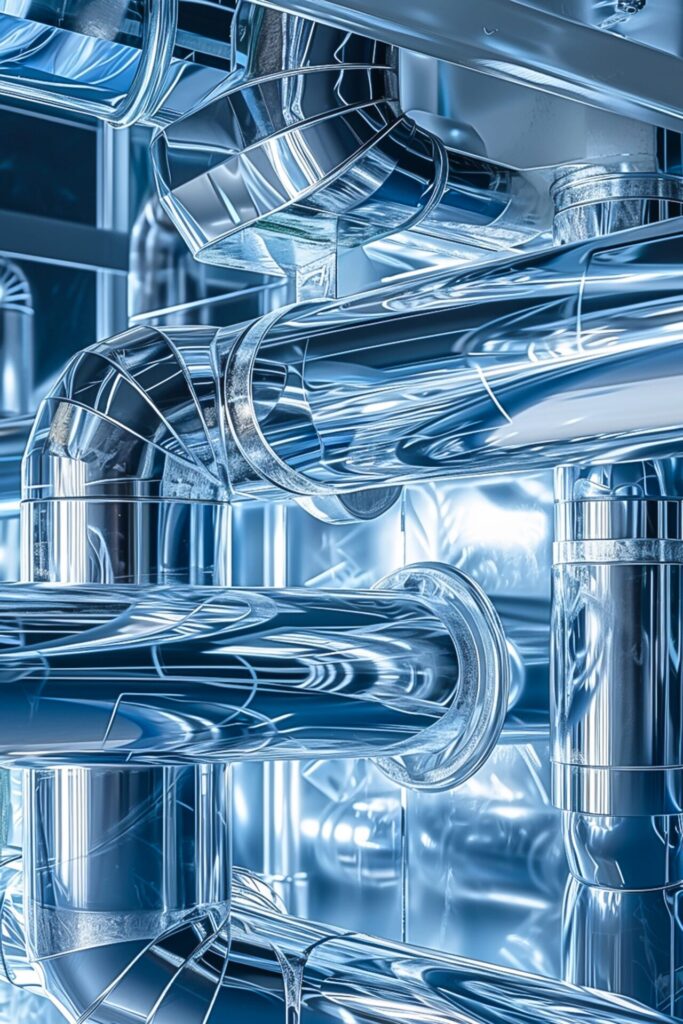
Electropolishing has no physical contact. It removes material uniformly at a sub-micron level and leaves behind a clean, chromium-rich oxide layer that is chemically stable and highly corrosion-resistant. For piping carrying high-purity process gases, this difference is decisive.
The Key Benefits for UHP Piping
Reduced surface roughness. Mechanical polishing achieves ~20–25 Ra microinch. Electropolishing routinely achieves ≤10 Ra microinch, with some processes reaching 5 Ra or below. Fewer surface features means fewer sites for contamination to adhere.
Enhanced chromium passivation. Electropolishing selectively removes iron from the surface layer, increasing the chromium-to-iron ratio. The result is a thicker, more stable passive layer that resists attack from aggressive semiconductor process chemistries.
Lower particle generation. The smooth, passive surface has fewer micro-asperities from which particles can break free during gas flow — a core reason SEMI standards require electropolished internal surfaces for process gas piping.
Faster purge-down. A rough surface has far more area per unit length than a smooth one, meaning more sites for moisture uptake and outgassing. Electropolished surfaces purge down faster, which matters during commissioning and after maintenance.
Better corrosion resistance. Gases like hydrogen fluoride and chlorinated compounds are highly corrosive. The enhanced passive layer provides meaningfully better resistance compared to mechanically polished surfaces.
Which SEMI Standards Apply?
SEMI F20 sets baseline requirements for bulk and specialty gas delivery systems. SEMI F72 covers the procurement and acceptance of electropolished components — if a supplier cannot reference F72 compliance, question their UHP capability. SEMI F19 and F57 address fluoropolymer components used where stainless steel is not appropriate.
Where in a Fab Is It Required?
Electropolishing is required wherever contamination sensitivity is highest: specialty gas distribution, ultra-pure water and chemical lines, bulk gas systems, and CMP slurry lines. Standard HVAC, cooling water, and process exhaust do not require it.
How Lesico Manages Electropolishing Requirements
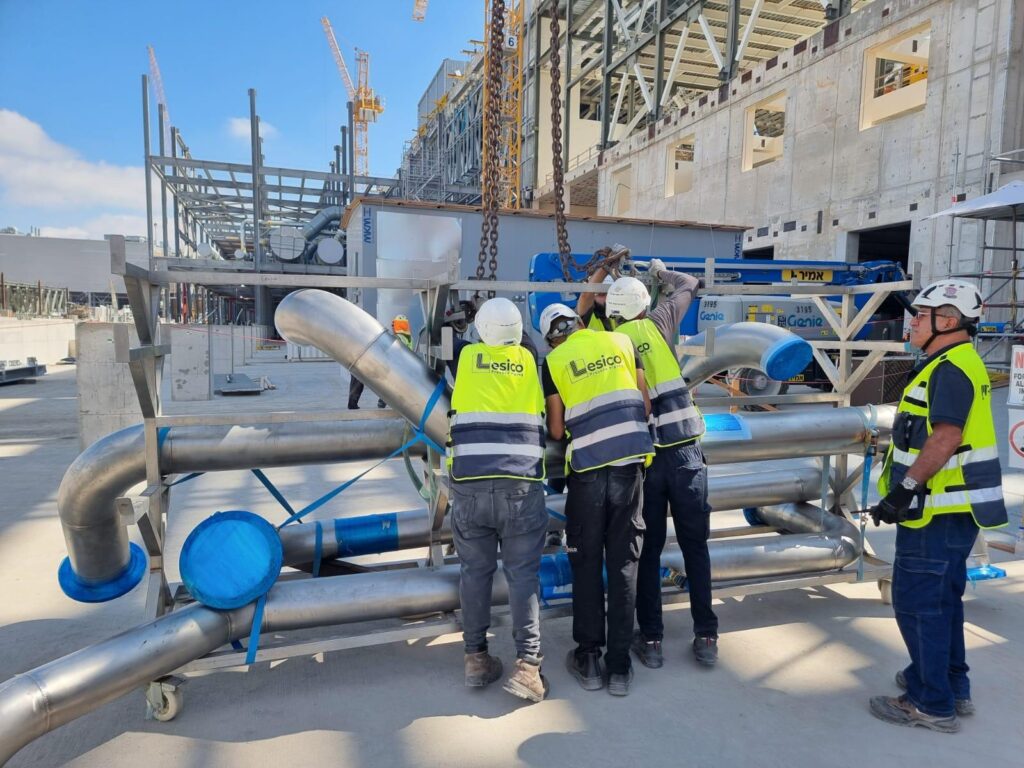
At Lesico, electropolished piping is a routine part of our UHP fabrication scope. We source tube and fittings from approved suppliers with full material certification and surface finish documentation. Weld joints — always made by automated orbital welding — are boroscope-inspected to confirm the internal surface has not been compromised during welding.
Our off-site model means electropolished assemblies arrive at your site already manufactured, cleaned, passivated, and packaged — ready to install.
Need electropolished UHP piping for your project? Talk to the Lesico team.